our partners




Get updates on mail
address
270 Angas St,
Adelaide SA 5000
Copyright © 2026 Bicycle SA. All Rights Reserved.
270 Angas St,
Adelaide SA 5000
Copyright © 2026 Bicycle SA. All Rights Reserved.
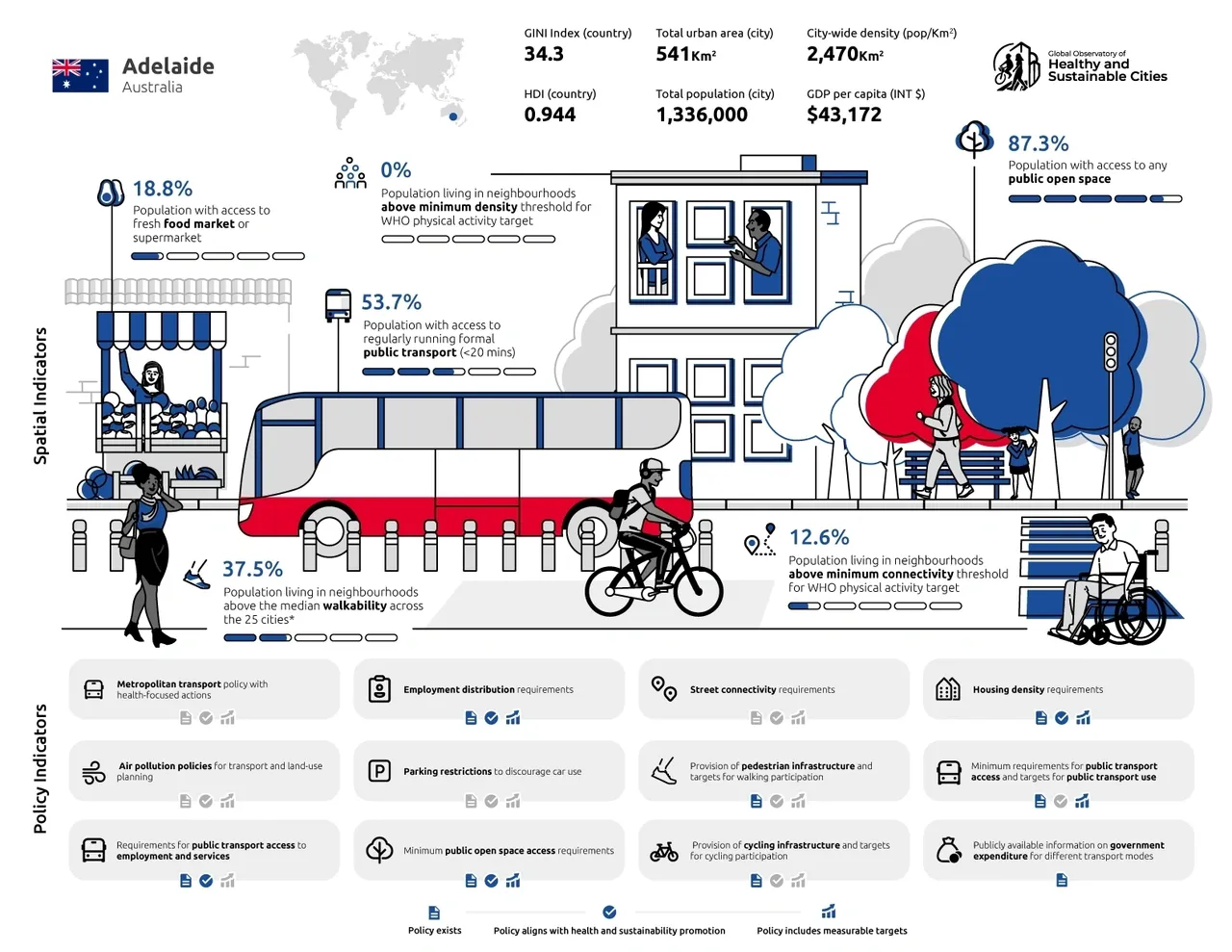
A new report published by The Lancet Global Health has found that Adelaide’s health and sustainability policies are performing “below average” when compared against 24 other global cities.
The 3.5 year-long study produced in collaboration with the Global Observatory of Healthy and Sustainable Cities benchmarked key health and sustainability indicators between cities such as Chennai, Sao Paulo, Seattle and Lisbon, as well as Sydney, Melbourne and Auckland.
While Adelaide’s availability of urban and transport policies ranked above average, the report noted the quality of the policies are below average.
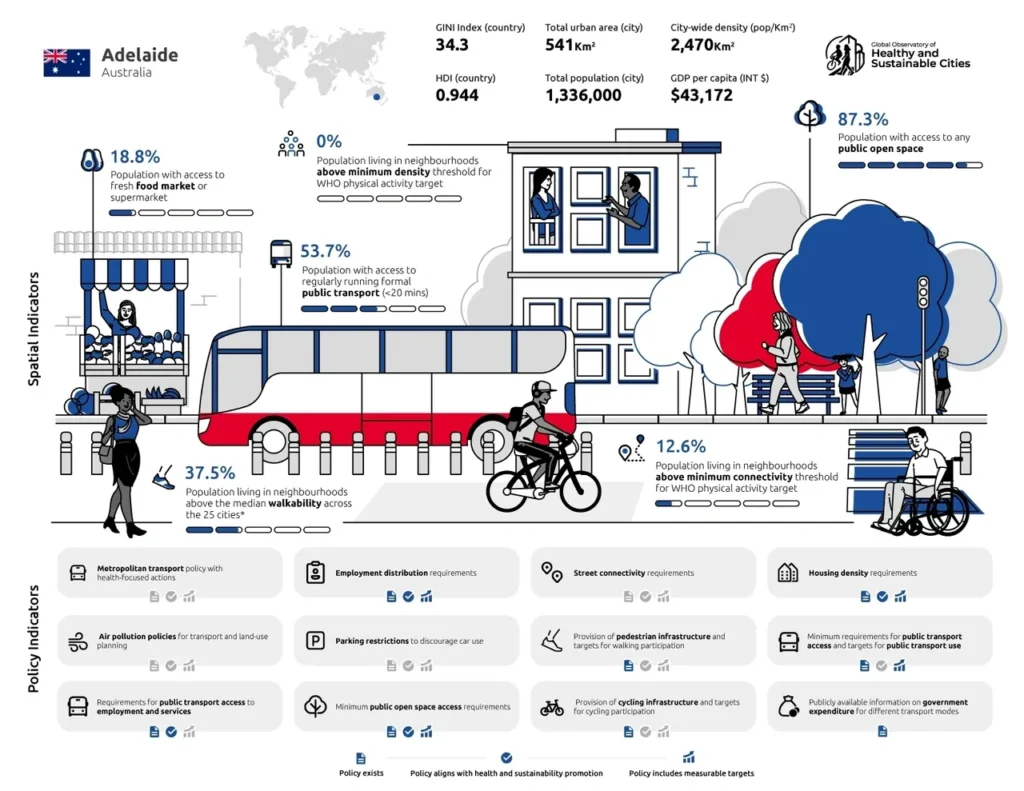
It found that Adelaide’s targets for walking, cycling, and public transport use are too low and therefore inconsistent with recommended global health targets. A majority of Adelaide’s suburbs ranked low for walkability and, alarmingly, no suburbs reached the minimum population density threshold recommended by the WHO to encourage physical activity.
Meanwhile, only 13% of Adelaide’s suburbs met street connectivity thresholds, and only 54% of residents currently live within a reasonable distance to a public transport stop with a frequent service.
While the majority of Adelaide’s population has access to some form of nearby public open space, only 58% of the population has access to a larger public open space within 500m. The report also found that the percentage of population with access to a food market or convenience store within 500m is below average.
Bicycle SA was given the opportunity to contribute to the important research which is helping to highlight and contextualise the specific challenges that South Australia faces in regards to active transport.
“This report continues to spotlight the need for a serious focus on active transport provision in Adelaide and South Australia, which of course includes bikes”, said Bicycle SA CEO Brett Gillett.
“We know we need to be placing a greater emphasis on health, both physical and mental, and these are influenced heavily by our natural and built environments. This report goes a long way to pinpointing specific, measurable policy areas in need of improvement at the state level.”
“At a cycling level, we are missing measureable targets for cycling infrastructure provision as well as cycling participation targets which are consistent with accepted health evidence”.
The Adelaide-specific report can be accessed via the Global Observatory of Healthy and Sustainable Cities. Further readings from the series can be read here.