our partners




Get updates on mail
address
270 Angas St,
Adelaide SA 5000
Copyright © 2026 Bicycle SA. All Rights Reserved.
270 Angas St,
Adelaide SA 5000
Copyright © 2026 Bicycle SA. All Rights Reserved.
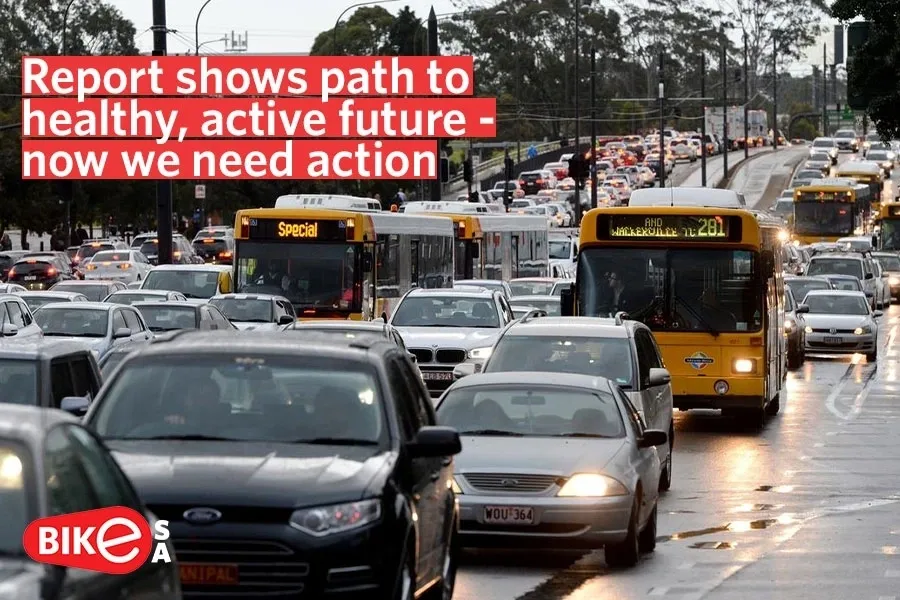
South Australia’s government has a golden opportunity to boost health and wellbeing and positively impact traffic congestion after having been presented with a blueprint for action in the form of the Report of the Select Committee on Public and Active Transport.
The committee, chaired by Greens MLC Robert Simms, was established on 1 June last year. After months of receiving public submissions and hearing from witnesses including many in the cycling industry, it delivered a report in February containing 13 detailed recommendations to reduce the motor vehicle’s stranglehold on our transport options.
More than 100 individuals and organisations including Bicycle SA, Bike Adelaide, the Amy Gillett Foundation, Unley Bicycle User Group, Conservation Council SA and the Heart Foundation provided written submissions and 50 witnesses, including BSA Chief Executive Brett Gillett, appeared before the committee in person.
Brett said he was thrilled with the chance to take part in the committee’s work in striving for a more equitable and healthy transport network.
“As your voice in community and recreational cycling, Bicycle SA is here to advocate for you,” he said. “Addressing the Select Committee was a wonderful opportunity to highlight some of the key issues that continue to affect our cycling community. We will continue to pursue every such opportunity we can.”
Many of the recommendations – like increasing the frequency and integration of public transport services or setting targets for increased take-up of active transport – were predictable while still being well worth repeating.
But others boldly provided the means for South Australia to climb out of the quicksand it has been bogged down in on this issue, including:
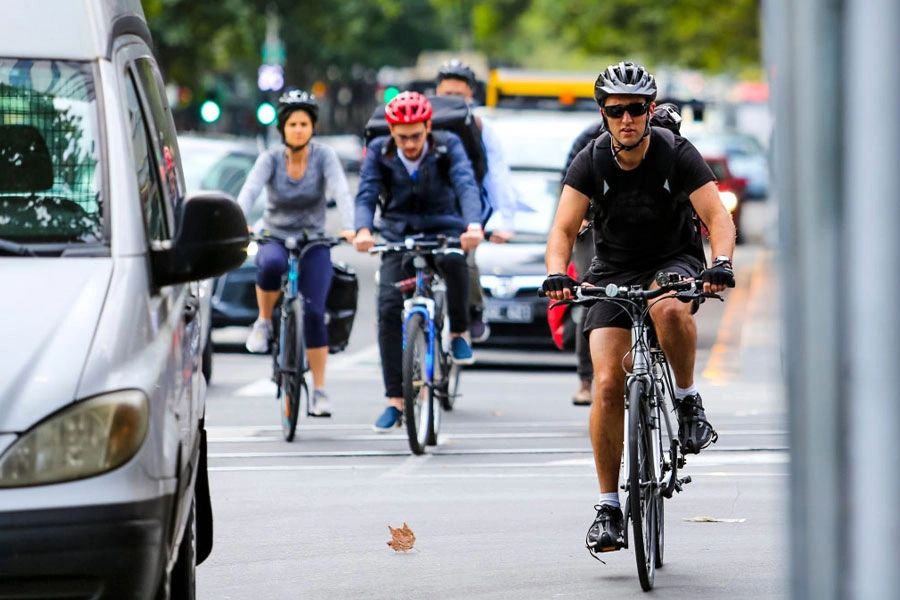
The key feature of all these recommendations is high-level leadership that advocates for widespread adoption of transport choices other than the personal motor vehicle.
This is exactly the change South Australia needs.
Successive governments have acknowledged the challenges we face in regard to health & fitness, climate change and the traffic chaos caused by the ever-increasing number of single-occupant motor vehicles on our roads. But nothing like this report and these policies that can take a giant swipe at all these issues at the same time.
Acknowledging a problem is pointless without providing this kind of leadership to solve it. People are not going to make the kind of changes we need en masse without it – that is what government is for.
The terms of reference for the inquiry included examining the role of government in enabling and encouraging active transport, including: Measures to improve safety for cyclists and pedestrians; measures to enable more participation; and the effect such encouragement would have on health, wellbeing and climate change mitigation.
It found that although there is an economic cost to improving infrastructure, those costs are balanced by benefits involving improvements to those community and environmental health metrics.
“The problem with transport policy is chicken and egg, Mr Simms said. “Governments don’t invest in alternatives to motor transport then say no one is using the alternatives. They have to appropriately invest in the alternatives, particularly public transport, cycling infrastructure and making streets safer for cyclists and pedestrians.
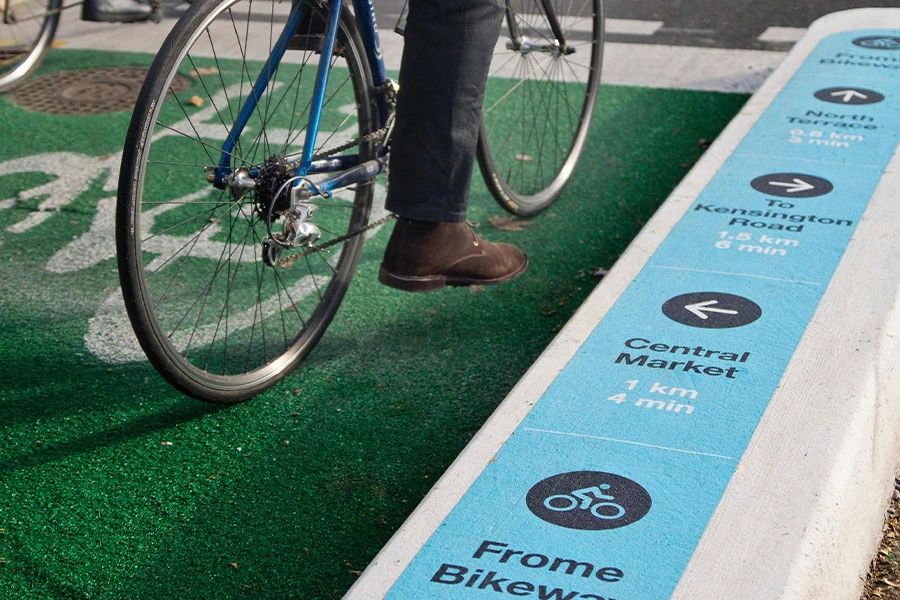
“The report also recommends things like pop-up bikeways which happened around the world (during Covid). Unfortunately, it didn’t happen here in South Australia. I pushed it when I was on the Adelaide City Council and I’ll continue to push it with the State Government.
“I’m pushing the government to make cycling a priority and to work with other levels of government to achieve that.”
Mr Simms, who practises what he preaches and does not own a car, preferring to walk and use public transport, puts great value on the idea of an extensive separated cycling network. “A network of separated bike paths that run throughout the state, I think is really key.
“That’s something I’d love to see government get behind so cyclists can travel safely right across the state, and I think you’d see a big uptake of cycling if that were to occur.”
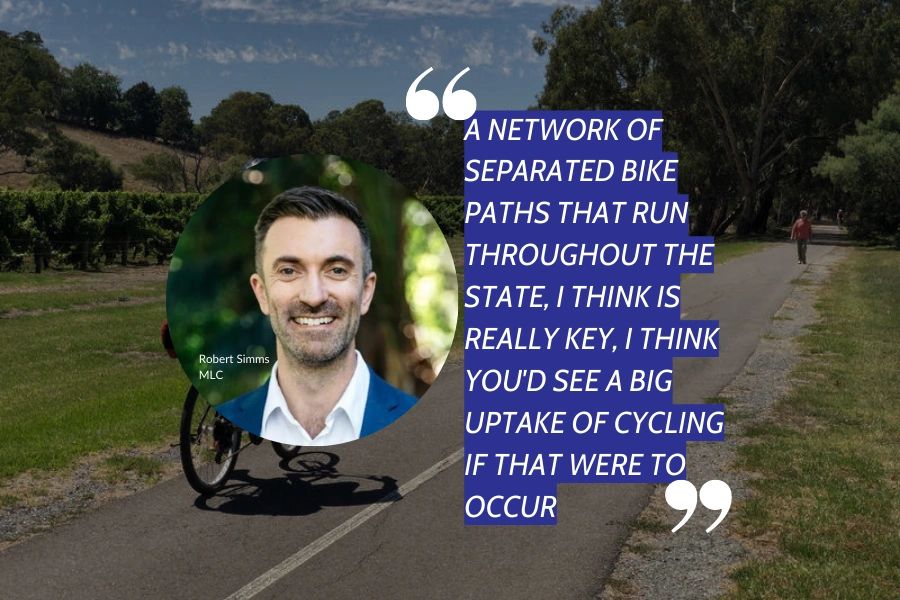
And he said that South Australia “desperately needs” a broader vision in regards to community mobility. “Imagine what we could achieve in our state if rather than pumping $15 billion into building tunnels to alleviate congestion in the south, we actually looked at alternative forms of transport.
“Cities around the world are light years ahead of Adelaide yet here in SA we really have the handbrake applied. Things like pop-up bikeways are easy changes that could be implemented. I’d really love to see the government think creatively and look at what’s happening in other jurisdictions overseas.”
SA’s Minister for Infrastructure and Transport, Tom Koutsantonis, said the State Government was considering the committee’s recommendations.
“The Labor Government has a strong commitment to active transport,” Mr Koutsantonis said. “Encouraging greater bicycle use takes congestion off our roads and ultimately helps ease pressure on our health system by encouraging healthy lifestyles.
“We are looking at further options for encouraging greater bike use around Adelaide – and making travel safer and more enjoyable for those who already ride.”
One submission to the committee that did not become a recommendation, but which Mr Simms personally supports, is that government should consider a subsidy for the purchase of e-bikes. It is an idea that is also being strongly advocated by national independent voice for cycling, We Ride Australia.
We Ride has for years been working on developing a national e-bike leasing scheme and last year led an alliance that presented federal parliamentarians with a document calling for three transport policies for the 2022 federal election, one of which was the e-bike subsidy scheme.
The election initiative was made in concert with the Australasian Society of Physical Activity, more than 35 national organisations and nearly one hundred experts and the data supporting it is clear and significant.
Not only would a government incentive to get more people riding e-bikes return up to $3 for every $1 invested, but:
We Ride executive officer Peter Bourke said the increasing cost of transport was headlining cost-of-living pressures across the country.
“It is a critical time for families as they struggle with transport and living costs in general,” Mr Bourke said. “The pandemic showed how willing Australians are to embrace walking and cycling for their short local trips and e-bikes are the great leveller that can get us all mobile easily, quickly and enjoyably.
“Our modelling shows how effective an incentive would be for Australians who would like to take their kids to school, ride to the local shops or ride to work.”
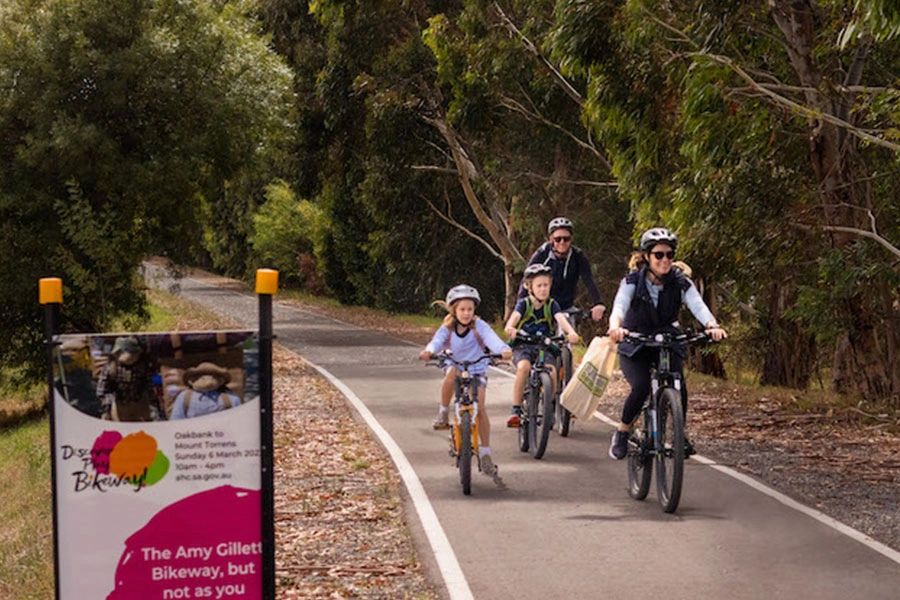
The We Ride data, particularly the 3-1 return on investment, supports the committee’s finding that the costs of improving infrastructure for active transport “are balanced by benefits for community health and wellbeing, and the environment” and that those costs are likely to be offset by savings in public health outcomes.
Mr Simms strongly believes that the changes recommended in the committee’s report are not only worthy and beneficial, but inevitable. That to encourage more people to be more active and have a much smaller environmental footprint is not turning our backs on modern technology.
It is, rather, embracing the best of new technologies to maximise their benefits where we really need them but to use simpler, cleaner, healthier options where they are clearly more appropriate.
Our transport planning and organisation has become quite the one-trick pony and that lack of imagination has become intrenched to society’s considerable detriment.
Imagine if we used that same philosophy in our own households, our personal tool sheds. Sledgehammers and chainsaws are worthy, useful tools. But most of the time the appropriate tool is much smaller, safer, less impactful and more precise.
Such is the case with our transport environment, but instead we have been led into climbing into a sledgehammer day after day.