our partners





Get updates on mail
address
270 Angas St,
Adelaide SA 5000
Copyright © 2026 Bicycle SA. All Rights Reserved.
270 Angas St,
Adelaide SA 5000
Copyright © 2026 Bicycle SA. All Rights Reserved.
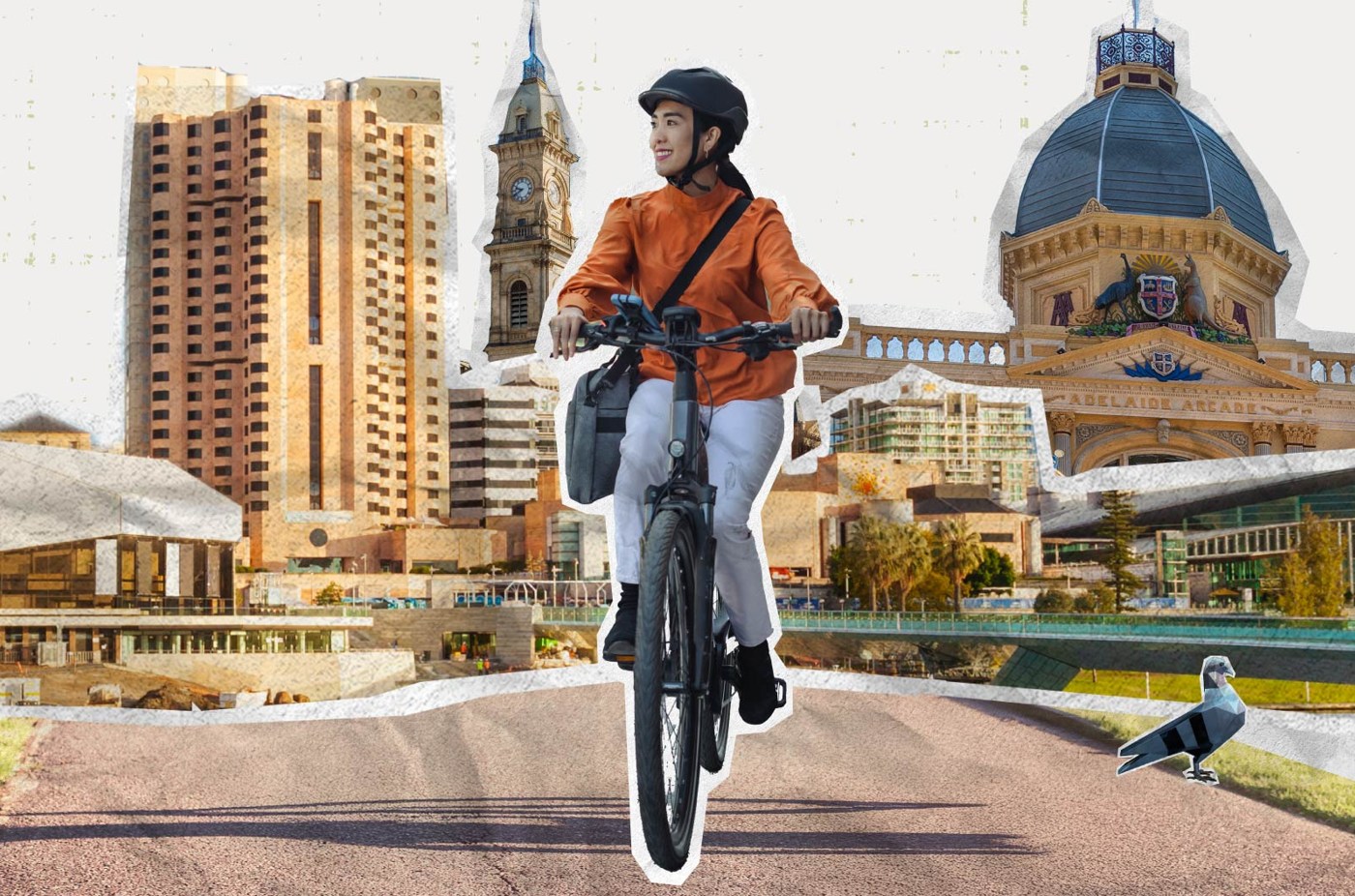
E-bikes are helping more South Australians enjoy the freedom and benefits of cycling. They make longer journeys and challenging terrain more manageable, while enabling people of different ages and abilities to ride for transport, recreation and connection with their communities.
As e-bike use continues to grow, it is important that South Australia’s laws support their benefits while responding effectively to genuine safety concerns.
BikeSA has submitted a comprehensive position paper to the South Australian Government’s recent review of e-bike regulation. Drawing on our experience with riders, volunteers, events and community programs, our submission advocates for rules that are clear, evidence-based and proportionate to risk.
Protecting responsible e-bike riders
At the heart of our submission is a straightforward principle: a safe and compliant e-bike is still a bicycle.
BikeSA supports retaining the existing 250-watt continuous rated power threshold and the 25 km/h assistance cut-off for ordinary e-bikes. We do not support requiring people riding legal e-bikes to hold a driver licence, register their bicycle or obtain compulsory motor vehicle insurance.
These requirements would create unnecessary barriers, particularly for younger people, people with disability and those who use an e-bike because driving is unavailable or unsuitable for them.
We also urged the Government to clearly distinguish between compliant e-bikes and high-powered electric vehicles that are sometimes marketed or described as e-bikes. Where a device effectively operates as an electric motorcycle, it should be regulated accordingly. The misuse of these vehicles should not result in unnecessary restrictions being imposed on people riding legal bicycles responsibly.
Clearer standards and better consumer protection
BikeSA supports adopting the European EN15194 standard as the principal standard for ordinary e-bikes, provided appropriate arrangements are made for existing lawful bicycles and specialist or adapted cycles.
Our submission also calls for permanent compliance labels and much clearer information at the point of sale. Consumers should be able to easily understand whether a device is legal on public roads and paths, its rated power and assisted-speed cut-off, as well as any restrictions on its use.
Importers and sellers must also share responsibility for compliance. It should not fall entirely on individual riders to determine whether a product marketed to them as an e-bike is actually legal to use.
Recognising the potential of e-cargo cycles
BikeSA has proposed a distinct category for purpose-built light e-cargo cycles, allowing up to 500 watts of continuous rated power while retaining the 25 km/h assistance cut-off.
The purpose of additional power would not be to make these cycles faster. It would help them safely carry children or substantial loads, negotiate hills and replace journeys that might otherwise be made by car or commercial vehicle.
Appropriate design and safety standards would be needed to ensure this category cannot become a loophole for high-powered devices.
Managing safety where it matters
BikeSA supports strong action against dangerous riding, deliberate tampering and the illegal use of high-powered electric vehicles. Penalties should reflect the seriousness of the behaviour, with appropriate safeguards where police are given powers to seize or destroy illegal devices.
We also support sensible speed management based on the riding environment. Our submission proposes a 15 km/h default limit for all bicycles on ordinary footpaths, while opposing a blanket 10 km/h limit for e-bikes on shared paths. A conventional bicycle and an e-bike travelling at the same speed generally present the same immediate risk, so regulation should focus on speed, behaviour and surrounding conditions rather than the bicycle’s power source.
Education, evidence and safer infrastructure
Regulation alone will not deliver safer cycling.
BikeSA has called for sustained community education to help riders, families and purchasers understand e-bike laws and safe riding practices. We have also emphasised the need for better crash data that distinguishes legal e-bikes from modified or non-compliant vehicles. Current figures do not reliably make that distinction, making it difficult to identify where risks are actually arising.
Most importantly, growing e-bike use strengthens the case for greater investment in safe, connected and separated cycling infrastructure. Where riders and pedestrians are repeatedly brought into conflict, governments should consider whether the underlying infrastructure is adequate before assuming another restriction or penalty is the answer.
BikeSA will continue working constructively with the State Government, councils and our cycling community to promote an approach that improves safety while protecting the accessibility and freedom that make cycling so valuable.
Our position is clear: support safe and legal e-bike use, act firmly against genuinely dangerous devices and behaviour, and give more South Australians safe places to ride.
Read BikeSA’s complete E-Bike Position Statement
Learn more about the South Australian Government’s e-bike rules review