our partners




Get updates on mail
address
270 Angas St,
Adelaide SA 5000
Copyright © 2026 Bicycle SA. All Rights Reserved.
270 Angas St,
Adelaide SA 5000
Copyright © 2026 Bicycle SA. All Rights Reserved.
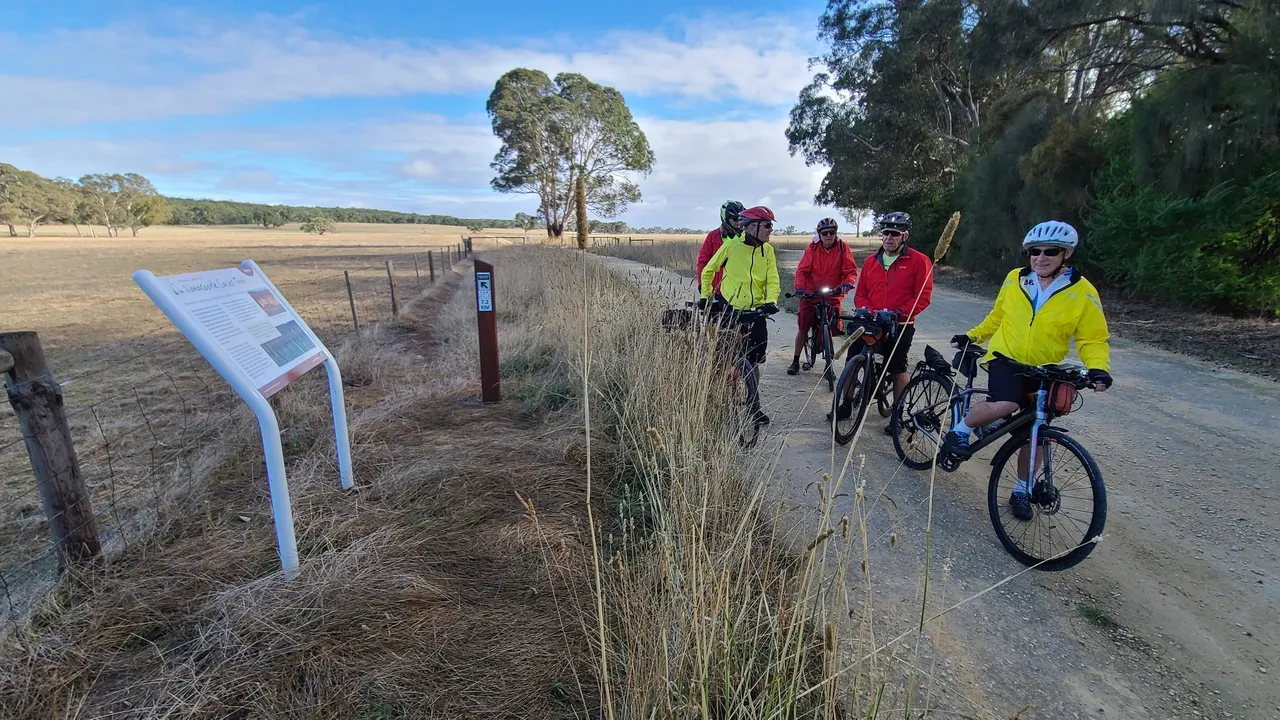
The Naracoorte Caves Trail
Story by Mal Watt, ride organised by Steve Freeman.
In March of 2023, seven regulars from the Wednesday Wheelers riding group set out on a cycling trip from Penola to Naracoorte. Looking at a map, that may not sound like much, but we went the long way, via the Victorian towns of Casterton, Harrow and Edenhope, and covered a total distance of about 330km, including side trips.
The longest day of the five-day expedition was 100km in the saddle. To reduce the amount of gear carried, the group opted to stay in cabins at caravan parks or in rooms at the local pubs.
To get to our starting point, the group booked themselves and their bikes onto a coach service from Adelaide to Penola. The afternoon arrival at Penola provided an opportunity for some riding time so, after leaving our gear at the caravan park, we rode a rail trail in some drizzle, past the old Coonawarra rail siding and down to Wynns Winery, where we enjoyed some sampling. We noted that the rail trail lacked a gentle slant or slight mounding to drain water, levelled with the rails still in place.
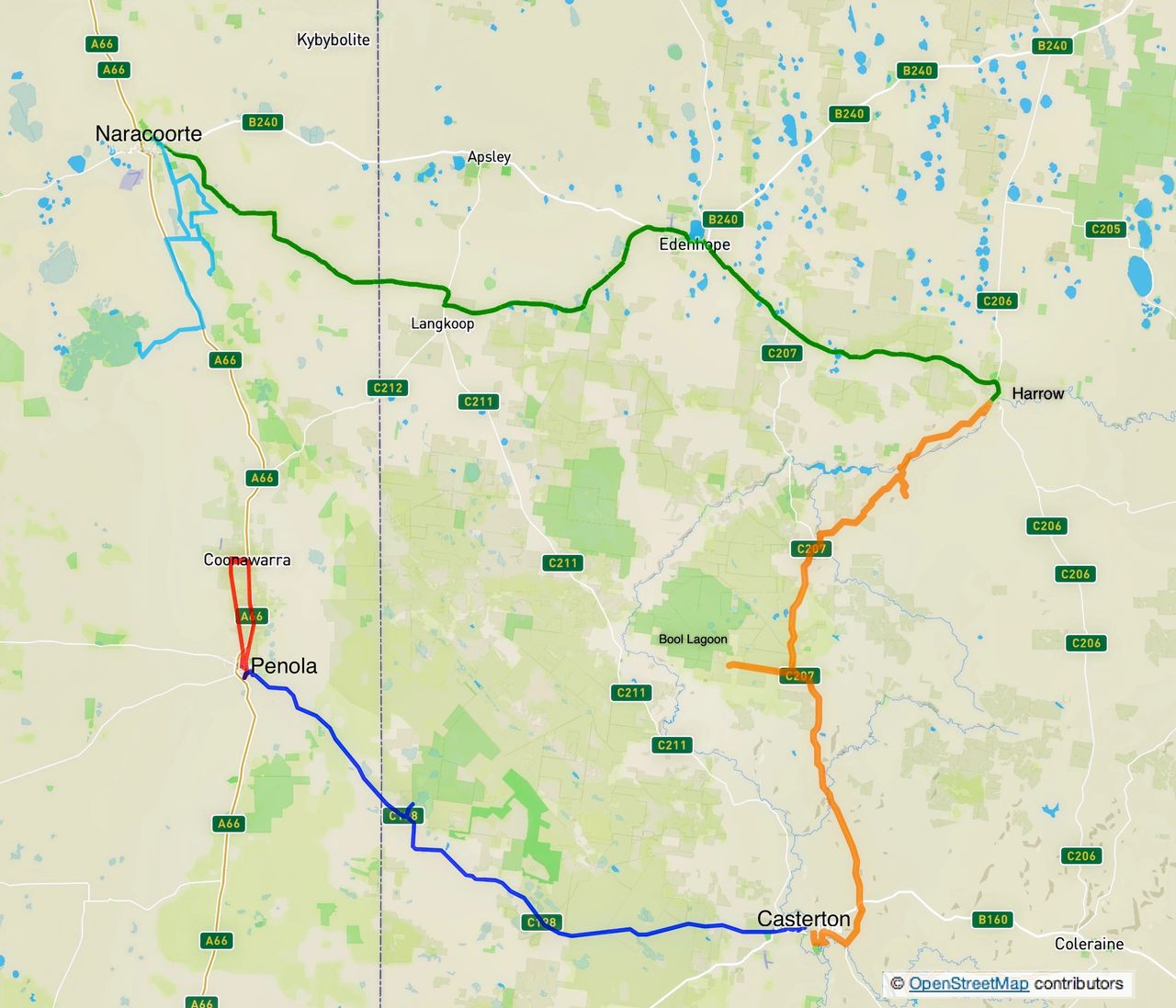
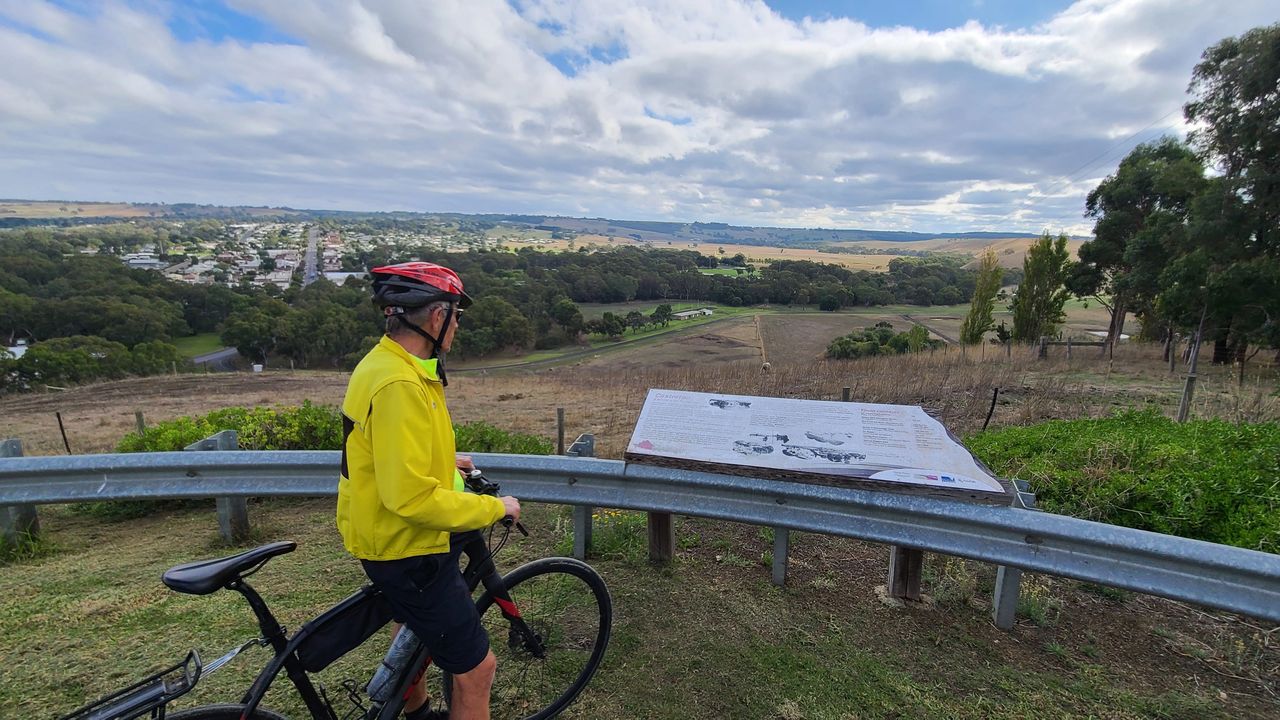
The next day, the group rode a flat 65km stretch in fine weather to Casterton, where we enjoyed the hospitality of the Albion Hotel and visited the Australian Kelpie Centre. Two of us decide to do an afternoon loop just outside Casterton and connected to the Kelpie Trail along the beautiful Glenelg River after returning from a steep ride up to the Mickle Lookout. The lookout, high above the town, offers a spectacular view of Casterton while the Kelpie Trail – mainly promoted as a walk – is also good for cycling and is a mix of footpaths, bitumen roads and dirt paths.
After a pub meal to close out a thoroughly enjoyable day, we played a couple of amusing games of 8-ball on an unstable table.
The following morning, on our way to Harrow, we inspected an abandoned railway trestle bridge over the Wannon River, before embarking on the 87km – peppered with 900m of climbs – to the pretty hamlet of Harrow. The day included diverting onto a dirt road down and back to see Bilston’s Tree, which is estimated to have been a seedling in about 1200AD and is still alive. It is famous for its great age and – at 44m tall and almost 8m in circumference – its tremendous size. We were warned about quarry trucks on the Casterton to Harrow section, but it must have been a quiet day as we encountered very few.
Harrow, nestled beside the Glenelg River, offered the group another nice pub stay. Anyone planning to visit may want to take a walk along the main street, which features some amusing displays as well as nicely maintained homes and a museum about the first cricket team to tour England (a team made up of local Aborigines).
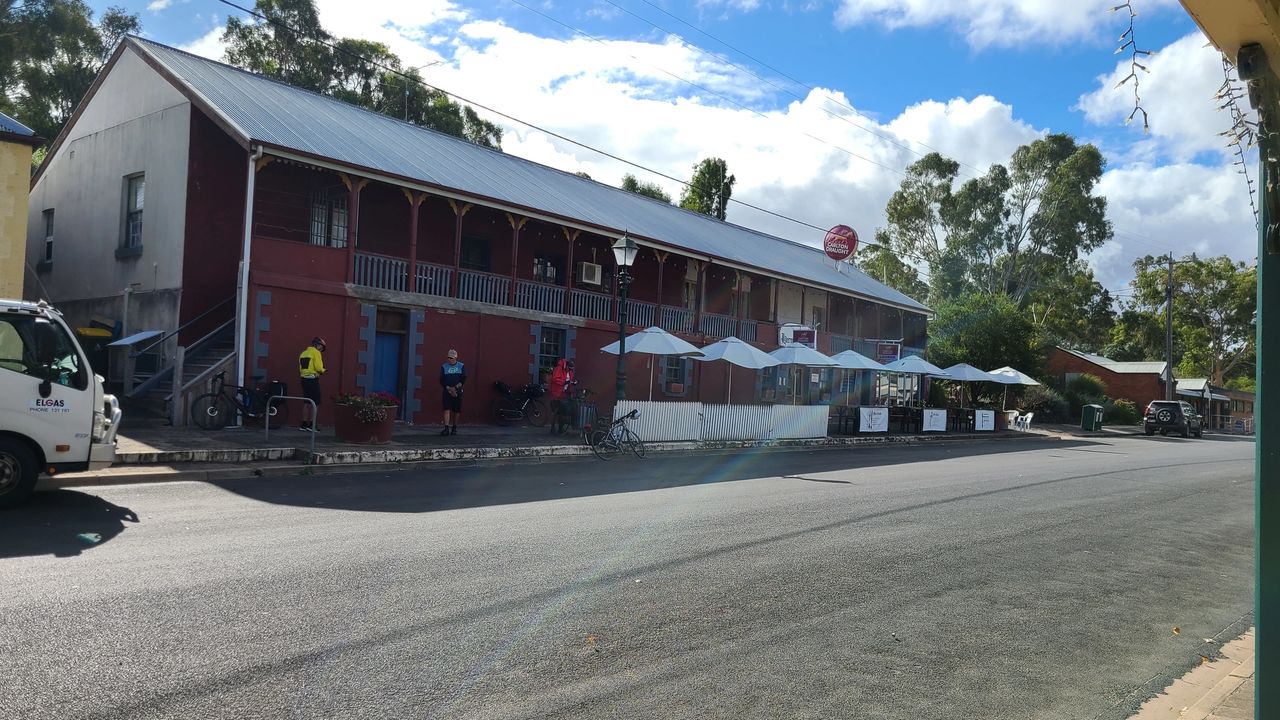
The final leg of the journey was a pleasant 100km ride from Harrow to the Naracoorte caravan park, with a coffee stop in Edenhope. The route was mostly level, apart from the easy ascent up from Harrow, which included a pause to admire a small stone bridge.
At Edenhope, we also stopped by the Dachshund Museum, as one member owned such a dog, and our group’s photo was added to the museum’s Facebook page. The ride continued through flat sheep pastures peppered with red river gums and on to Naracoorte.
We spent an extra day in Naracoorte and rode the Naracoorte Caves Trail (Naracoorte to the Caves), which is a 14.7km long trail that offers a “mix of sealed roads, unsealed roads, and sandy tracks”. However, we found all the surfaces to be hard-packed, and recommend this peaceful trail, which has trail markers and information signs along the route.
We had morning tea of scones, cream and jam at the Caves Café. As the group intended to ride to Bool Lagoon, we chatted with a ranger about a disputed “right of way” track that is shown on some maps from the Caves to the highway. We started down this track but turned around when it became unsuitable for several reasons, including sand and private property gates. So, we had to use the busy highway to the Bool Lagoon turnoff, then riding into a head wind and having lunch at the dry Bool Lagoon. We all agreed that riding along the highway (even with the reasonable shoulder) was not enjoyable. However, it was back along the busy highway for a while, then we turned off to the quieter Caves Rd back to Naracoorte – all up, another 75km.
If you are planning a similar trip, here are some useful tips:
• Coach transport – bikes can stand up in the coach’s wheel level luggage area if the front wheel is removed (and the bike seat is not extra high). There is a small fee for a bike. If it is a group ride, let the coach service know a group of cyclists will be booking and about how many.
• If staying at a pub, check what days they serve meals – if there are enough guests, they may arrange for a chef on a night not normally serving meals.
• Check which cafes and bakeries open early, assuming you want that sort of breakfast, or else BYO.
• Have a good headlight and taillight in case you end up riding in the dark or want to ride somewhere for evening meals.
• While primarily off main highways, these were still 100kph roads, so traffic (especially large and long vehicles) requires more reaction time and space. So be visible, be considerate.
This initiative of fellow rider Steve Freeman was an excellent way for members of the Wednesday Wheelers to challenge themselves with longer rides (well, longer for some anyway), explore new areas, and bond over a shared experience. It was great to discover new destinations beyond our normal riding areas.
The Wednesday Wheelers programme (3C rides) is a longstanding and popular free ride programme organised by Bike SA. Since its inception in the 1980s, the programme has been run by various volunteer coordinators who arrange with participating riders to take turns leading each week’s ride.
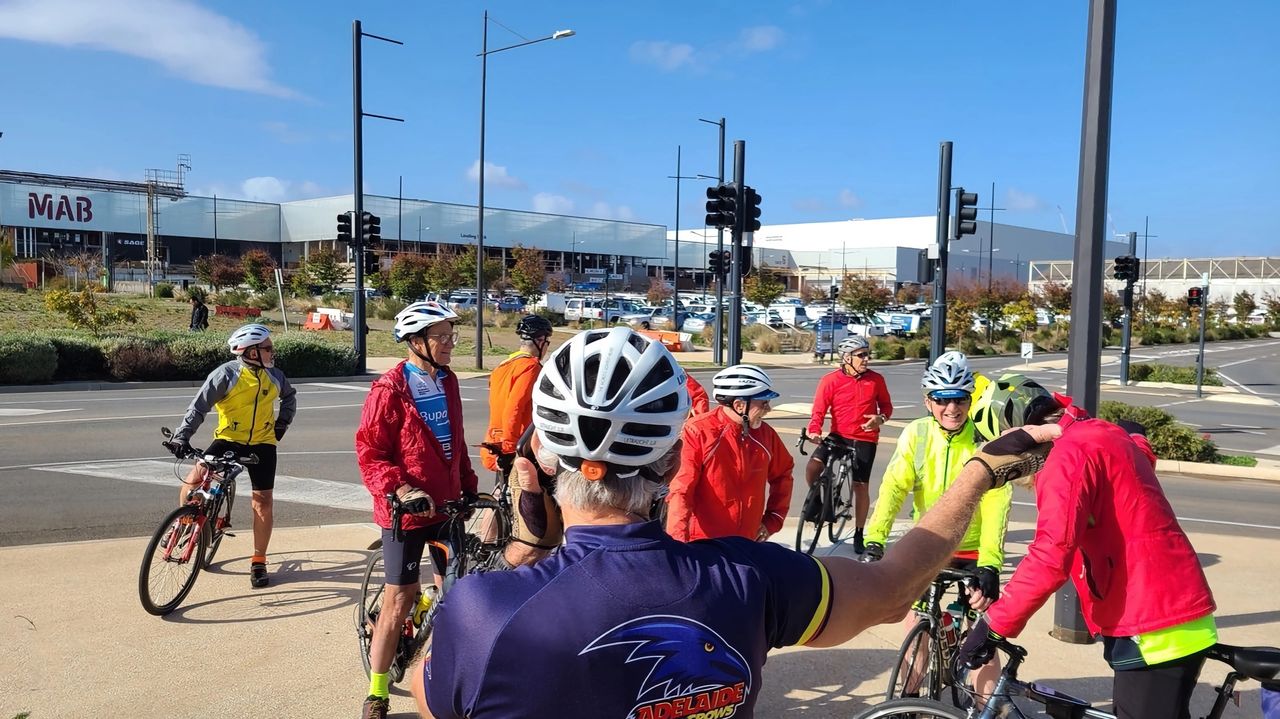
Originally, the rides started from Rose Park. However, nowadays, the starting location varies and is intentionally vague in the Bike SA programme due to the lead time in preparing the publication, which makes it difficult for ride leaders to commit to a specific date. Instead, the coordinator puts together a three-monthly programme just before each season after seeking volunteer ride leaders and route ideas.
This approach allows for greater flexibility in choosing starting locations, such as using the rail network to extend the starting points to the north (e.g., Barossa) or south (e.g., southern vales) and various shared paths and greenways in and out of Adelaide (e.g., Crafers, Mawson Lakes, Northern Expressway). Occasionally, ride leaders may suggest rides that require driving first, such as a hamlet in the hills.
There is also a spin-off group called the Wednesday Wearies who do the 3B ride, led by the coordinator for that group. Most of the Wearies riders once did the 3C rides but now look for gentler rides.
Both groups typically ride for 2 to 2.5 hours and then take a lunch break to chat and refuel. Usually, eight to 12 riders turn up for each group.
The Wednesday Wheelers programme has provided an opportunity for riders to explore Adelaide’s surroundings, make new friends and keep fit. The flexible approach to the starting points and the rotation of ride leaders has kept the programme engaging for many years.
This article first appeared in two parts, published in Bike SA’s Nov-Jan 2023 and Feb-Apr 2024 editions of Cycle Magazine.